


Connecting Lawyers with Expert Witnesses
Find your expert
Thank you! Your submission has been received!
Oops! Something went wrong while submitting the form.
WHAT IS THE GREATEST VALUE AN EXPERT CAN BRING TO YOUR CASE?
“Without an expert there is no case…” This was a frank insight
from counsel not long ago – and happened to confirm my own
conclusion about the greatest value I was bringing to counsel in
more recent years.
That value wasn’t just technical expertise as a forensic engineer
in the world of construction or skill at articulating issues and
findings – but rather in assisting counsel in the development of
their approach to a case. Curiously, this applies whether
counsel has a plaintiff or a defendant as their client.
The thing is, it is the rare case where counsel is knowledgeable about the technical
aspects of a case or the nature of the various business transactions between the parties
that have led to their being some sort of a dispute in the first place. What results at
times, for a variety of reasons, is that counsel may overly narrow the scope of the
experts engagement or otherwise overmanage the expert(s). This may be because
counsel believes they know the case better, out of a desire to keep the cost of the
expert at a minimum, or a myriad of other notions and intentions – which may also
dictate the selection of an expert for a case. Real value may be being lost as a result.
The mini case study vignettes below may best illustrate the ways in which an expert
may strongly and positively impact the approach to a case. They are of course not
counsel themselves, nor is it necessary for the expert to advocate for your client in their
testimony.
Casino/Convention Center – “the smoking gun”.
architect for (apparently) missing a revision to the architectural plans that was
made to the design development plans just prior to finalizing the construction
plans for permit application.
and extensive during-construction redesign and rework of mechanical and other
systems that were affected by the design change – as well as premium time
labor to fix the schedule for a planned (and already booked) opening of this major
facility.
change. Defense counsel researched the original permit application plans as
well as subsequent permitting plan review revisions without finding said revision
and focused instead on challenging the claimed cost damages.
prepared (but not issued) just prior to permit application – which ultimately
revealed that the last-minute architectural revisions had never been brought to
the engineers attention - nor submitted to the engineer in the run-up to permit
application.
project communiques that the architect did not follow their previously established
communication protocol (their own standard of care), thereby leaving the
engineer in the dark as the project design was completed and submitted for
permitting.
outcome of the case.
County courthouse. Asbestos release in an occupied building.
various plaintiffs.
retrofit of the courthouse and based their guaranteed-maximum-cost contract on
keeping the bulk of the building occupied during normal business hours – and
asserting that their work plan would maintain safe conditions and avoid the cost
of relocating court operations to another building during construction.
fireproofing on the underside of the floor decking - which then fell upon the
suspended ceiling in the spaces being kept occupied. Once the large central air
conditioning system was turned on following completion of the daily structural
work the air conditioning system effectively acted as an “asbestos transportation
and delivery system” throughout the building.
dust found on their desktop in their chambers each morning was asbestos.
understand and present the motivation of the criminal activity of the construction
manager at trial.
the defendant’s motivation was financial.
o The DAG was querulous about this explanation as the defendants’ actions
“did not increase their revenue”.
o We then pointed out that the construction management firm’s entire
contract would have been cancelled in its entirety had the asbestos
disturbance been discovered. And that this was why they defrauded their
certified asbestos consultant by telling them they were taking a “baseline”
indoor air quality measurement, and then falsely presenting those test
results to the County as though it was a post-construction air quality test,
thereby “proving” that their work methods did not result in contaminating
the building (thereby giving rise to the criminal prosecution).
High Rise Condominium. Extensive multi-floor flooding during minor HVAC repair.
of inadequate installation of a hydronic (circulating water) HVAC system.
thinking that really “poisoned the well” on the part of the referee managing the
case. The experts perpetrated numerous falsehoods regarding the facts in the
case that were almost unrecoverable at a certain point in the proceedings.
These included:
Wrongly characterizing the role of the installing contractor (claiming
design/build versus building to the plans-and-specifications prepared by
developers agents)
o Wrongly characterizing the qualifications of the service contractor who
broke a pipe (whereas the service technician’s union-provided training
was shown to not address hydronic systems at all)
o Wrongly characterizing the meaning of testing lab results (whereas the
testing in question was done without a protocol, and even the testing lab’s
own staff observed in their notes that the testing results were being
misread, which observation was conveniently kept well buried)
o The various experts cited each others’ false assertions as though they
were incontrovertible evidence.
to fall into a pattern of confirmation bias, in this case apparently morphing into
group confirmation bias. This constituted unethical advocacy (and potentially
even perjury), especially as some of the early-on false assertions were shown to
be willfully and knowingly false.
multiple false assertions were being propagated by the opposing side.
There are a few conclusions I have drawn over the years, that may be insightful to
plaintiff or defense counsel, including the following:
from practical experience is a weak practice.
how well they appear to support your view of the case, may ultimately be
detrimental to the case.
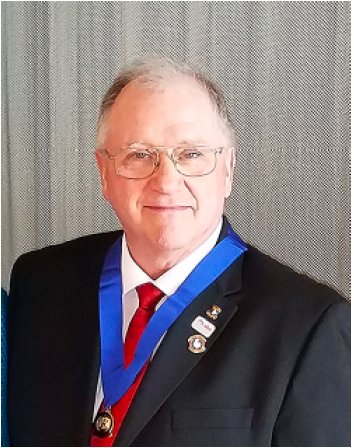
Based in West Sacramento CA, the author is president of Energy Resource Associates Inc., specializing in turnkey forensic examination and engineering of infrastructure renewal for existing building mechanical, electrical, control, and structural systems. Mr. Waltz is a member of the Association of Energy Engineers Hall of Fame, and a fellow of the Chartered Association of Building Engineers (CABE — UK), and chaired the first U.S. chapter.
Contact: jpwaltz@eraenergy.com

